Lesson 6: Eighth-note Grooves
All of these grooves are based on the backbeat you learnt in Lesson 4. They are presented in standard percussion notation. Refer to Lesson 5 for information on how to read this if you're not sure.
You can click on the notation itself to hear a MIDI file of what that groove sounds like.
The first four use only eighth notes on all instruments.
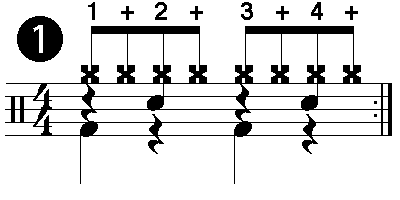
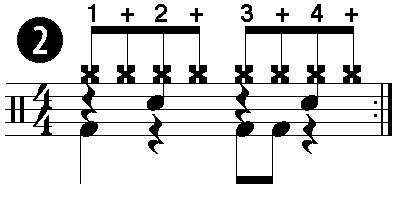
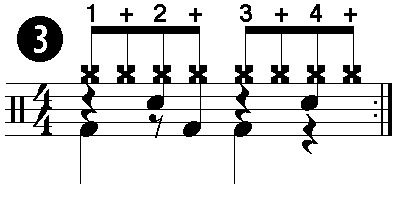
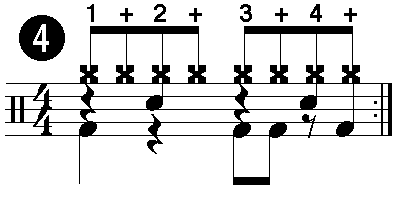
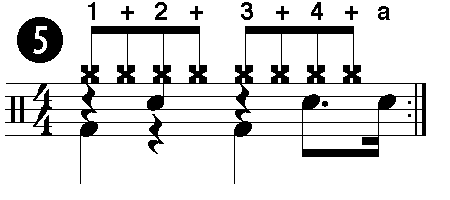
Now it gets a bit more interesting. #5 introduces a sixteenth note on the snare drum right at the end of the bar. To play this, you have to strike the snare drum in-between the hi-hat strokes on "4+" and the "1" of the following bar. It may be easier to think of it like this: as your right hand comes up from making the "4+" stroke, lower your left hand to play the snare drum on "4a", then as the left hand comes up, bring your right hand down to play the hi-hat for the "1". Practise the hand co-ordination before you try adding the bass drum...
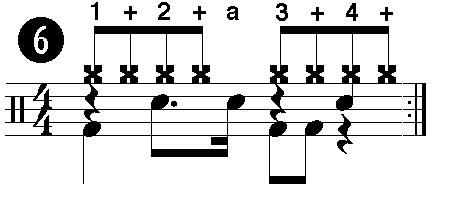
Similarly for the bass drum now - the note appears in-between the two hi-hat notes. You might find it harder to do this with your foot than you did with your hand - at least that was my experience when I was learning. But as you get used to it, it gets easier.
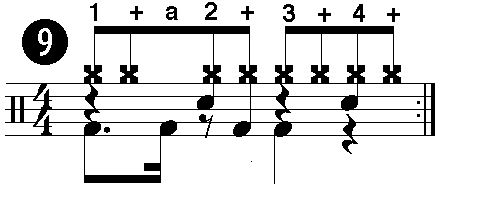
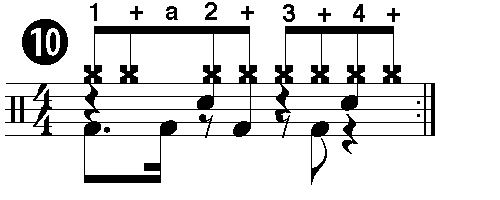
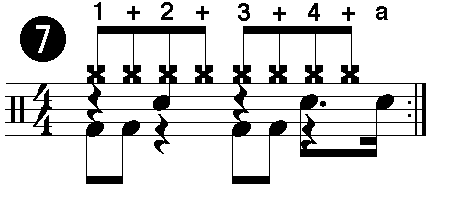
Now for a bit of syncopation, which is simply a note played off-beat. Try this example - have a listen first and take it slow until you get into its groove
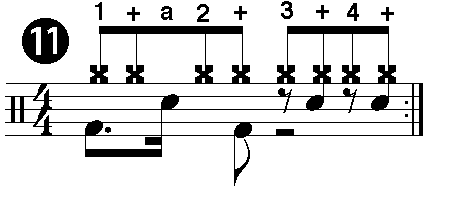
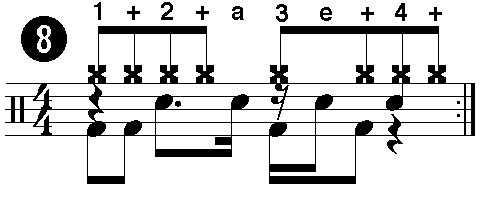
Now to combine a bit of #5 and #9...
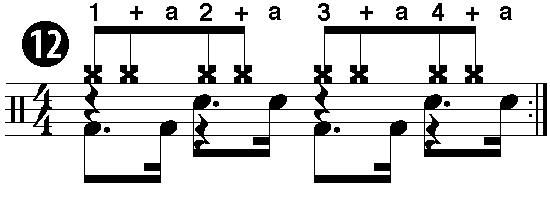
Practise these and make up your own variations... you can play them with almost any song on the radio today. Have fun!"
Lesson 1: Basics of Music Theory
Lesson 2: Parts of the Drum Kit
Lesson 3: Basic Techniques of Drumming
Lesson 4: Basic Drum Kit Technique
Lesson 5: Reading Drum Score
Lesson 6: Eighth-note Grooves
Lesson 7: Sixteenth-note Grooves
Lesson 8: Mixing It Up COMING SOON!
Lesson 9: Tricks and Tips COMING SOON!
5.2.3.1 - d-Wizz' Online Academy of Membranophonic Instruction Main Page
5 - d-Wizz Services
0 - Main Page
Now it gets a bit more interesting. #5 introduces a sixteenth note on the snare drum right at the end of the bar. To play this, you have to strike the snare drum in-between the hi-hat strokes on "4+" and the "1" of the following bar. It may be easier to think of it like this: as your right hand comes up from making the "4+" stroke, lower your left hand to play the snare drum on "4a", then as the left hand comes up, bring your right hand down to play the hi-hat for the "1". Practise the hand co-ordination before you try adding the bass drum...
Similarly for the bass drum now - the note appears in-between the two hi-hat notes. You might find it harder to do this with your foot than you did with your hand - at least that was my experience when I was learning. But as you get used to it, it gets easier.
Now for a bit of syncopation, which is simply a note played off-beat. Try this example - have a listen first and take it slow until you get into its groove
Now to combine a bit of #5 and #9...
Practise these and make up your own variations... you can play them with almost any song on the radio today. Have fun!"